Class-Based Leveling Rule
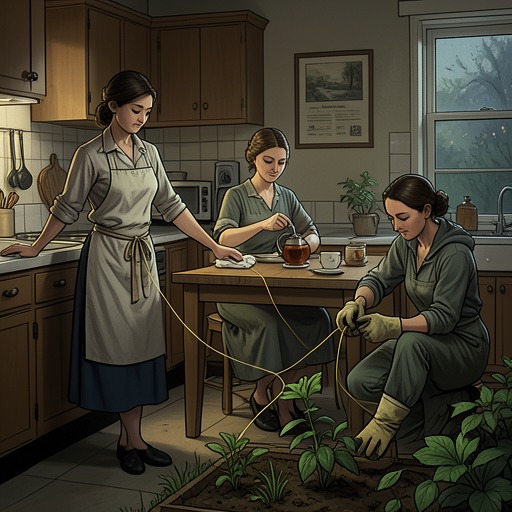
Cinnamon BunThe Class-Based Leveling Rule governs how characters gain experience and advance through the world’s class system. Its decisive principle is that a person progresses most efficiently by performing actions aligned with the identity and capabilities of the current class, so the system does not treat all labor as interchangeable: cleaning, fighting, gardening, baking, and making friends can all matter, but their value depends on the class performing them and on the level of practice involved.
Definition and Core Operation
The rule is first experienced through the system’s explicit class and skill displays. Broccoli Bunch begins with the Cinnamon Bun class at level 0, a support-oriented identity described as exceptionally pure, friendly, and helpful. When Broccoli performs a Special Action consistent with that class by cleaning a neglected room, the system immediately awards the Cleaning skill. The skill is initially listed at Rank F with 100 percent progress and is defined as an ability whose effectiveness improves as its rank rises.
The same interface quantifies advancement through separate measures. Class Points are awarded as a resource for upgrading a class skill, while skills such as Jumping receive their own rank display. The system therefore distinguishes between class level, skill rank, and points available for improvement rather than collapsing every form of development into one undifferentiated experience bar.
Class-Aligned Advancement
The rule becomes clearest when Broccoli questions an unexpected level increase after gathering cloudberries. Broccoli reports receiving a Gardening rank increase simply for picking berries and then advancing without killing anything. Milread explains that this is how levels normally work: most characters level by doing things in line with their class. Her own Sword Sweeper class produces progress through fighting and sword practice; a Baker would instead advance most naturally through baking.
Severin adds an important qualification. Broccoli’s current class could still gain experience from baking, but doing so would require an order of magnitude more work than usual. Class alignment therefore functions as a multiplier of efficiency rather than an absolute prohibition. Off-class actions remain possible, but the system makes them substantially less productive, encouraging characters to repeat activities that reinforce their established class identity.
Broccoli’s earlier experience initially obscures this principle. Combat against three level-one Sentinel Ghosts grants bonus experience for defeating multiple enemies above Broccoli’s level, and the Cinnamon Bun class subsequently reaches level 1, raising Stamina by five. Because Broccoli has so far associated level increases with combat, the noncombat Gardening advancement comes as a genuine correction to that assumption. The conversation with Milread and Severin converts a personal surprise into a general explanation of the rule.
Skills, Repetition, and Special Actions
The rule also connects advancement to repeated behavior. Cleaning is unlocked not through a formal lesson but through the performance of a class-consistent Special Action. Later, the system identifies a general skill called Friendmaking after Broccoli repeats a social Special Action often enough. This extends class-based progression beyond physical combat and tradeable abilities into conduct and relationship-building.
Other notifications show that the system can reward both qualitative achievement and accumulation. Broccoli’s Cinnamon Bun class reaches level 4 with increases of five Health and five Resilience, while the Cleaning skill eventually reaches Rank C at 100 percent during a confrontation with a swamp slime. The same ability that began as a modest, even “boring” reward for tidying a room can therefore become an actively usable resource under pressure, linking mundane practice to later survival.
The system’s feedback is continuous and interventionist. It appears when a class-consistent action unlocks Cleaning, when enemies are defeated, when class points become available, when a quest updates, and when a repeated action unlocks Friendmaking. These notifications make progress legible in percentages, ranks, points, and stat increases, encouraging Broccoli to interpret daily choices through the language of measurable development.
Quests, Consequences, and Ethical Tension
Class-based advancement operates alongside quests and other system judgments. A quest announces that a great evil has rooted itself in the world and calls upon Broccoli to save it, offering the explicit choices to accept or refuse. After Broccoli discovers the Evil Root, the quest warns that Broccoli is too weak to destroy it and instructs Broccoli to break the dungeon core so that the root will starve. Completion produces the striking message, “The world thanks you for your sacrifice!”
These rewards and instructions reveal that the system does more than record ability. It frames actions as meaningful, assigns consequences, and translates danger into an apparently objective sequence of prompts, updates, and rewards. Yet Broccoli does not respond to every system message with unquestioning confidence: the Evil Root instruction is recognized as wildly dangerous, and the apparent reality of the initial quest prompt is doubted. The rule thus creates a tension between numerical guidance and personal judgment.
Narrative Significance
The Class-Based Leveling Rule makes growth both a game mechanic and a theory of character. Broccoli’s progress is not limited to killing monsters. Cleaning a room, gathering berries, jumping, cultivating social bonds, enduring combat, and returning to a practiced skill all become possible routes through the same quantified world. The rule rewards consistency, but it also leaves room for discovery when an action that seems unrelated to combat proves connected to advancement.
Its most distinctive effect is the conversion of temperament into capability. Broccoli’s Cinnamon Bun identity favors support and friendship, and the system validates those tendencies through Cleaning and Friendmaking rather than treating them as distractions from the adventure. At the same time, combat can still produce rapid gains, as shown by the bonus experience from defeating stronger Sentinel Ghosts. The resulting progression system does not erase violence, but places it beside care, labor, practice, and companionship as competing forms of meaningful action.